A morally disturbing protagonist can make a story difficult to read, but also difficult to forget. The challenge is not to make readers approve of the character. It is to make them understand how the character thinks, what drives their choices, and why their presence controls the direction of the story.
Writers often feel pressure to make a main character sympathetic. However, sympathy is not always necessary. A protagonist can be cruel, manipulative, selfish, or dangerous and still hold a reader’s attention. What matters is that the character feels psychologically consistent.
A disturbing protagonist needs a clear internal logic. Their actions may be unacceptable, but they should not feel random. Readers need to understand the beliefs, desires, fears, or obsessions behind the behaviour. This creates tension because the audience can follow the character’s reasoning without agreeing with it.
Point of view plays an important role. When readers are placed inside the mind of a morally troubling character, they gain access to thoughts that other characters cannot see. This closeness can create discomfort. The reader may understand the protagonist’s methods while recognising the harm those methods cause.
The writer must also avoid forcing excuses onto the page. A painful past or personal belief may explain behaviour, but it should not automatically absolve the character. Explanation and approval are not the same. Strong fiction allows readers to witness the character honestly and reach their own conclusions.
Consequences are equally important. A morally disturbing protagonist should affect the people around them. Their choices should leave emotional, psychological, or physical damage. Showing these consequences prevents the story from treating harmful behaviour as meaningless entertainment.
The other characters also help shape the reader’s response. Fear, resistance, dependence, confusion, and anger reveal the true impact of the protagonist’s actions. These reactions create a broader moral perspective, especially when the main character cannot or will not recognise the harm being done.
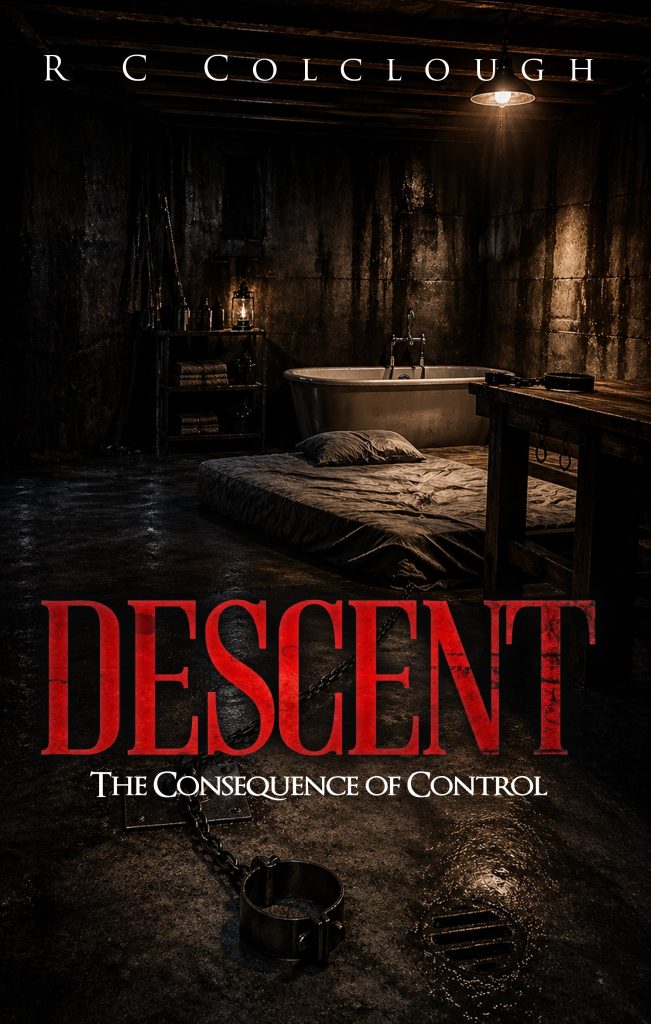
In Descent, R C Colclough places readers close to a protagonist whose actions are deeply troubling. Ken sees psychological control as something that can be tested, measured, and achieved. His confidence in his methods shapes every stage of Sheila’s captivity and transformation.
The novel does not require readers to admire him. Instead, it asks them to examine how power, repetition, isolation, and dependence can be used to alter another person’s identity. His perspective creates discomfort because he often treats manipulation as a planned process rather than a moral violation.
This approach makes Descent a dark study of control and character psychology. The story invites readers to observe a disturbing mind while remaining aware of the damage it creates.
For readers drawn to morally complex characters, psychological control, and unsettling questions about identity, Descent offers a provocative experience that does not ask for approval, only attention.